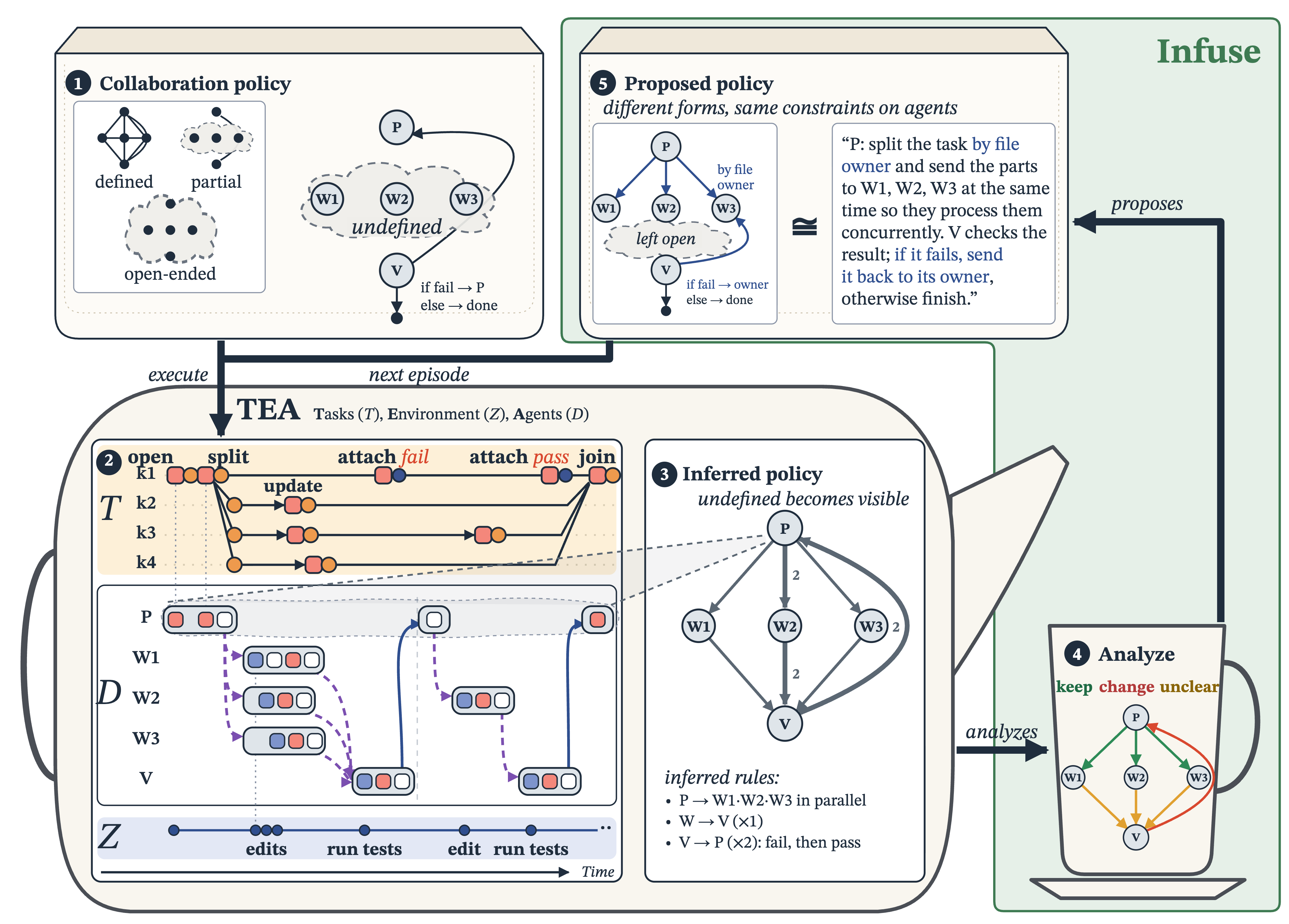
Introduces Task-Environment-Agents (TEA), a structural representation that couples an Agent Interaction Graph with a Task Activity Graph and the shared environment. It makes evolving collaboration explicit without prescribing agent reasoning, behavior, or communication order, and Infuse uses TEA records to recover, assess, and improve collaboration policies.
Auditing Emergent LLM-Agent Collaboration through Cooperation-Obligation Coupling
Represents emergent collaboration through coupled cooperation-obligation graphs that formalize work soundness and assignment stability. Their joint satisfaction quantifies state quality and yields a conditional performance bound.
G
actionartifactevidence
Π
Q
openassignedaccepted
COOP2: Defining, Observing, and Repairing Cooperation in LLM Multi-Agent Systems
H. Yang, N. Nourzad, S. Chen, M. Siew, J. Chen, and C. Joe-Wong
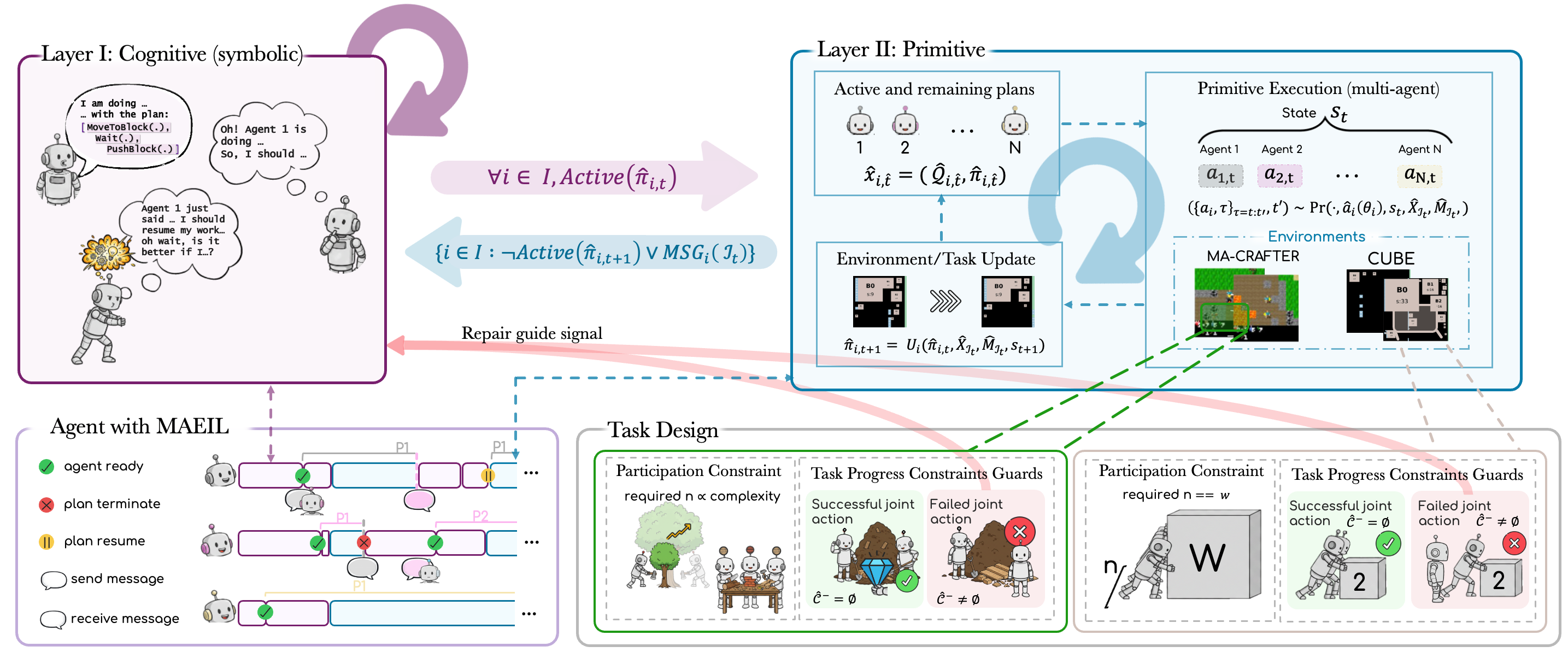
Formalizes cooperation from two connected sides: what cooperative tasks require and how LLM agents reason, communicate, use tools, and act across cognitive and primitive layers. Aligning both makes cooperation observable, while the COOP2-Repair case study highlights how the formulation can support targeted replanning.
DIG to Heal: Scaling General-Purpose Agent Collaboration via Explainable Dynamic Decision Paths
H. Yang, H. Lee, Y. Yao, Z. Liu, K. Liu, J. Chen, and C. Joe-Wong
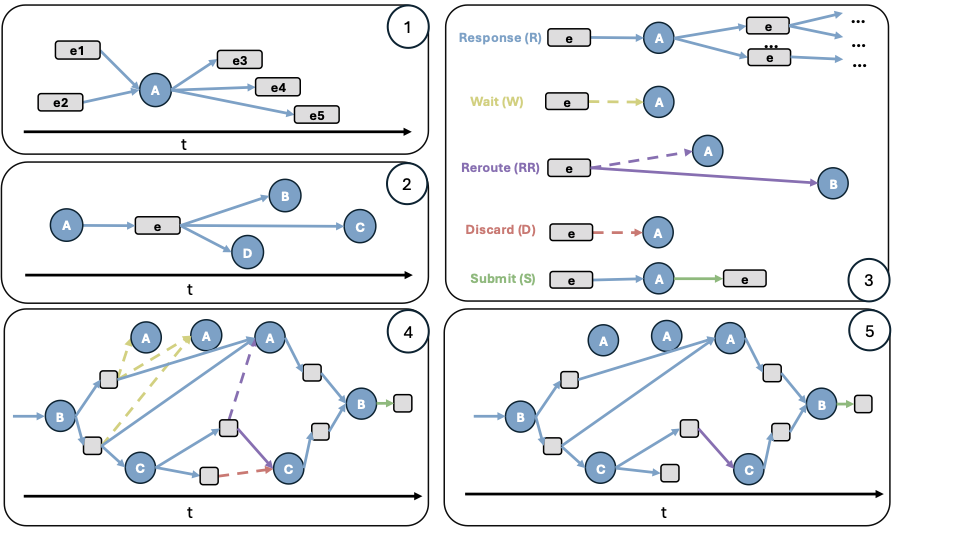
Represents asynchronous multi-agent execution as a time-evolving graph of agent activations and events. The graph exposes reachability and progress failures and supports online healing through information injection and rerouting.
The Five Ws of Multi-Agent Communication: Who Talks to Whom, When, What, and Why: A Survey from MARL to Emergent Language and LLMs
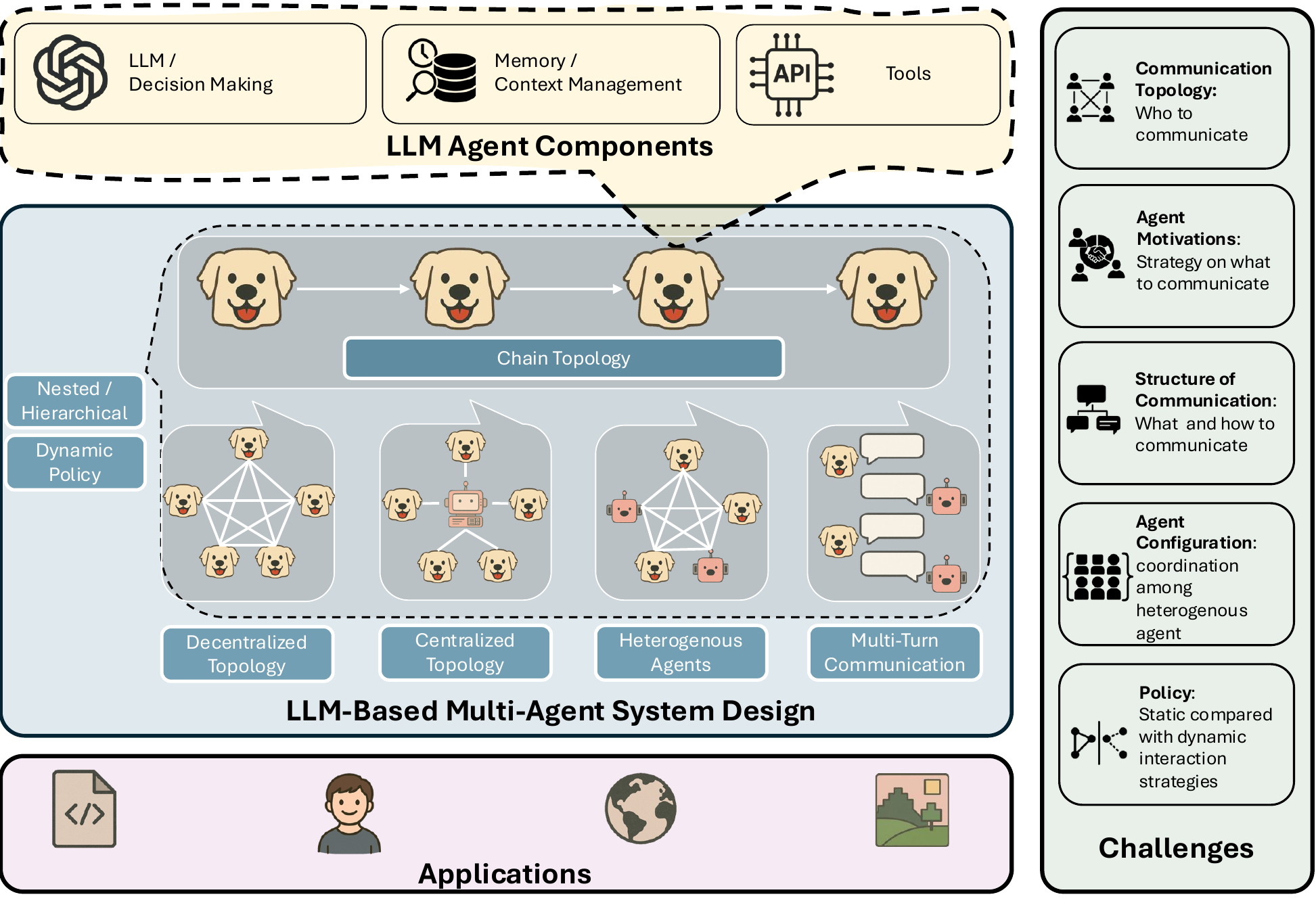
Surveys communication structures across MARL, emergent language, and LLM-based multi-agent systems through who talks to whom, when, what, and why. It reveals how organizational assumptions are often built into communication mechanisms rather than collaboration examined directly.
2025
DR. WELL: Dynamic Reasoning and Learning with Symbolic World Model for Embodied LLM-Based Multi-Agent Collaboration
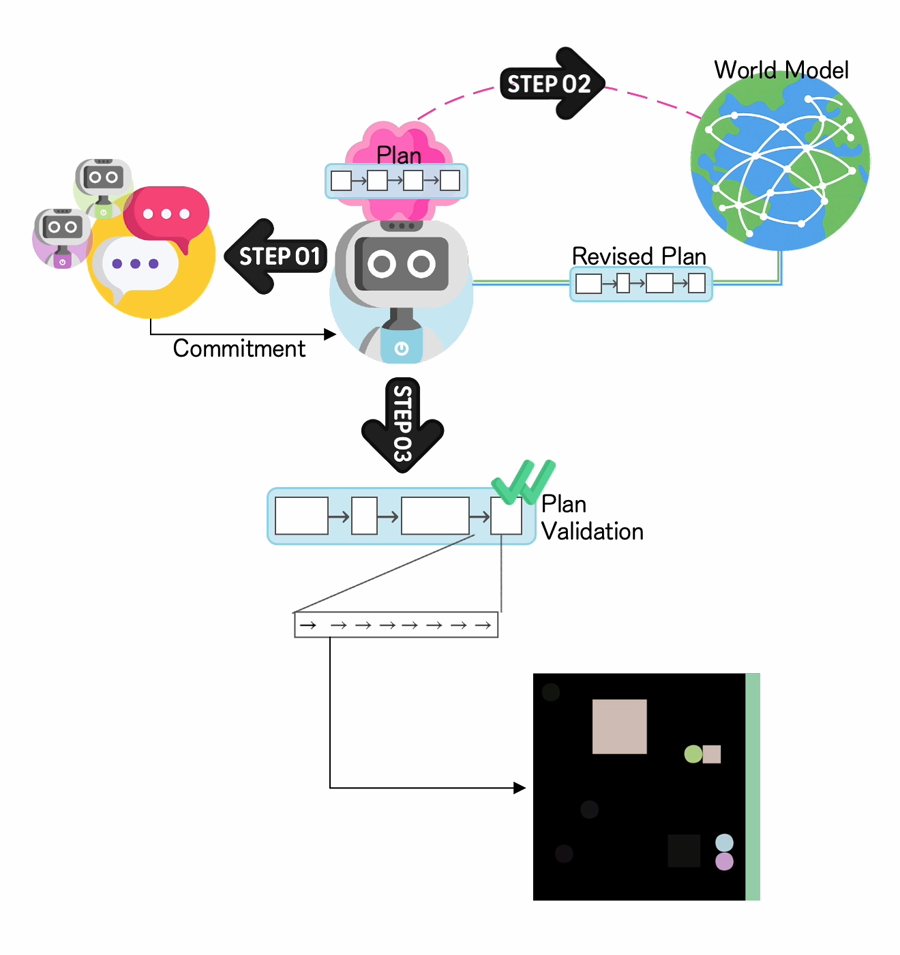
Coordinates embodied agents through two phases: agents negotiate and commit to roles, then independently execute symbolic plans grounded in a shared world model. Working above raw trajectories makes collaboration more reusable and interpretable while allowing the world model to improve across episodes.
CUBE: Collaborative Multi-Agent Block-Pushing Environment for Collective Planning with LLM Agents
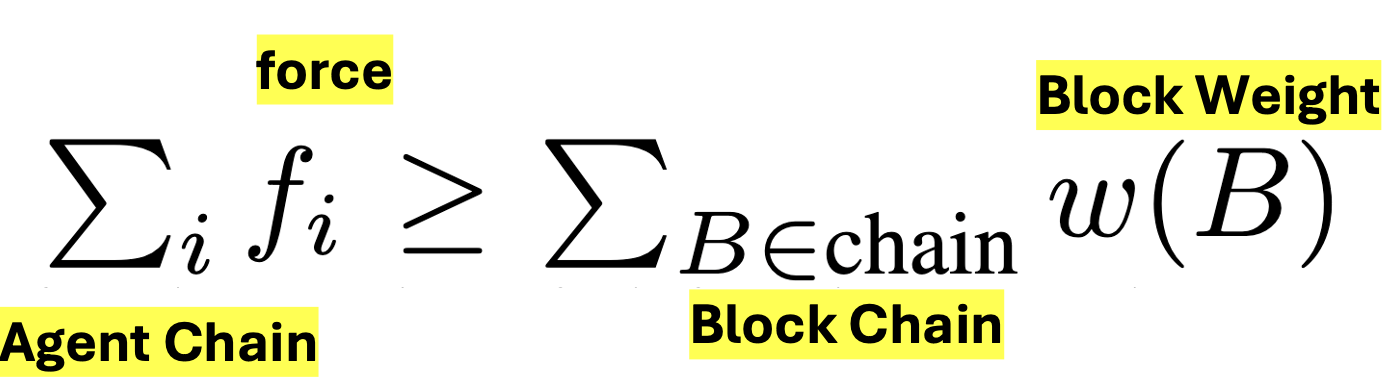
Designs weighted blocks, force, congestion, collisions, and timing so task-induced dependencies and collective capability become explicit. Some goals are individually infeasible, allowing collaboration to be studied as a property of the task rather than only of the policy.
LLM-Powered Decentralized Generative Agents with Adaptive Hierarchical Knowledge Graph for Cooperative Planning
H. Yang, J. Chen, M. Siew, T. Lorido-Botran, and C. Joe-Wong
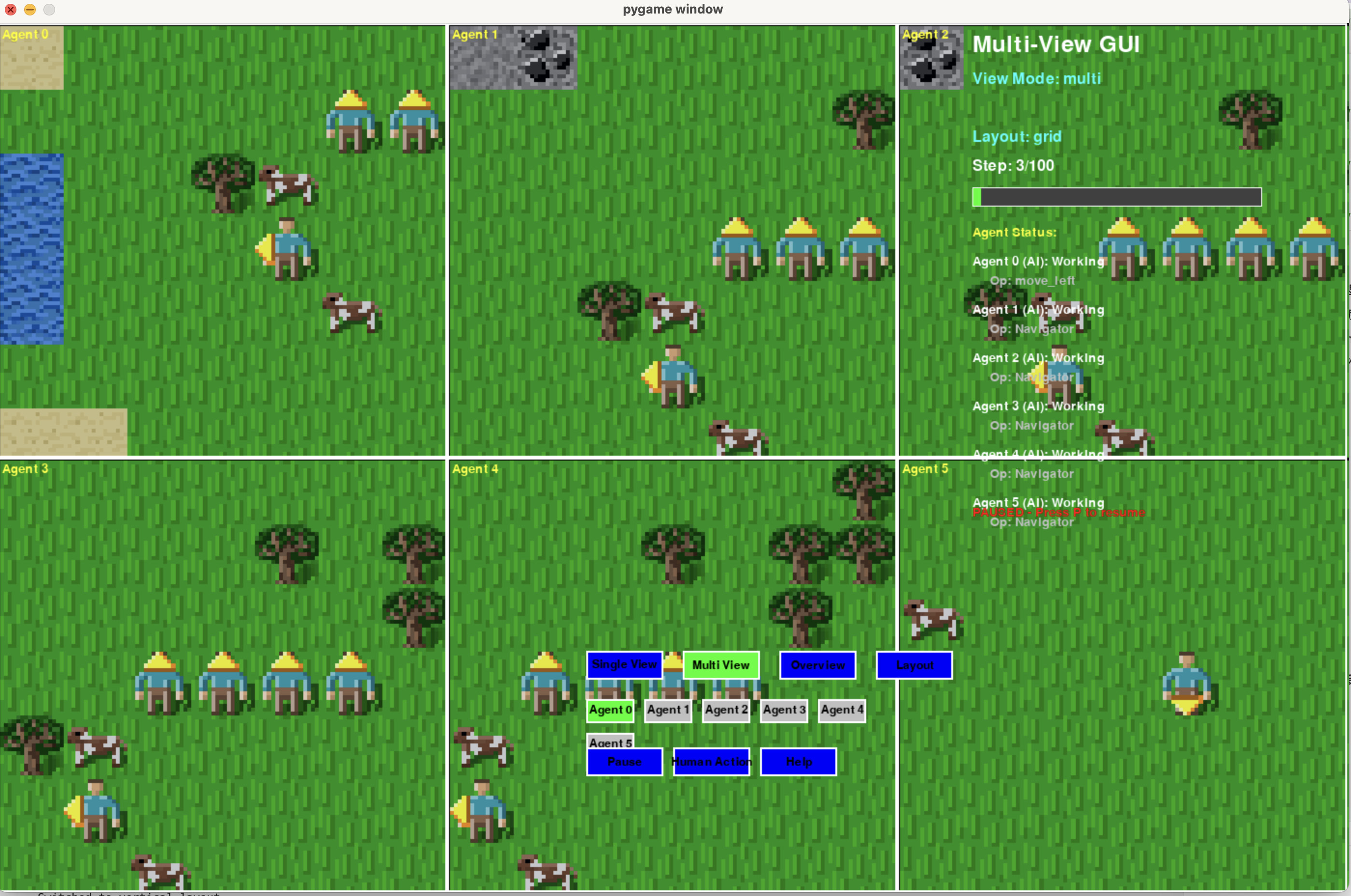
Introduces DAMCS, whose adaptive hierarchical knowledge graph organizes multimodal experience into shared and local memory. Decentralized agents can reason from past interactions while sharing relevant knowledge rather than entire histories during long-horizon planning under dependency constraints.
2024
An LLM-Based Digital Twin for Optimizing Human-in-the-Loop Systems
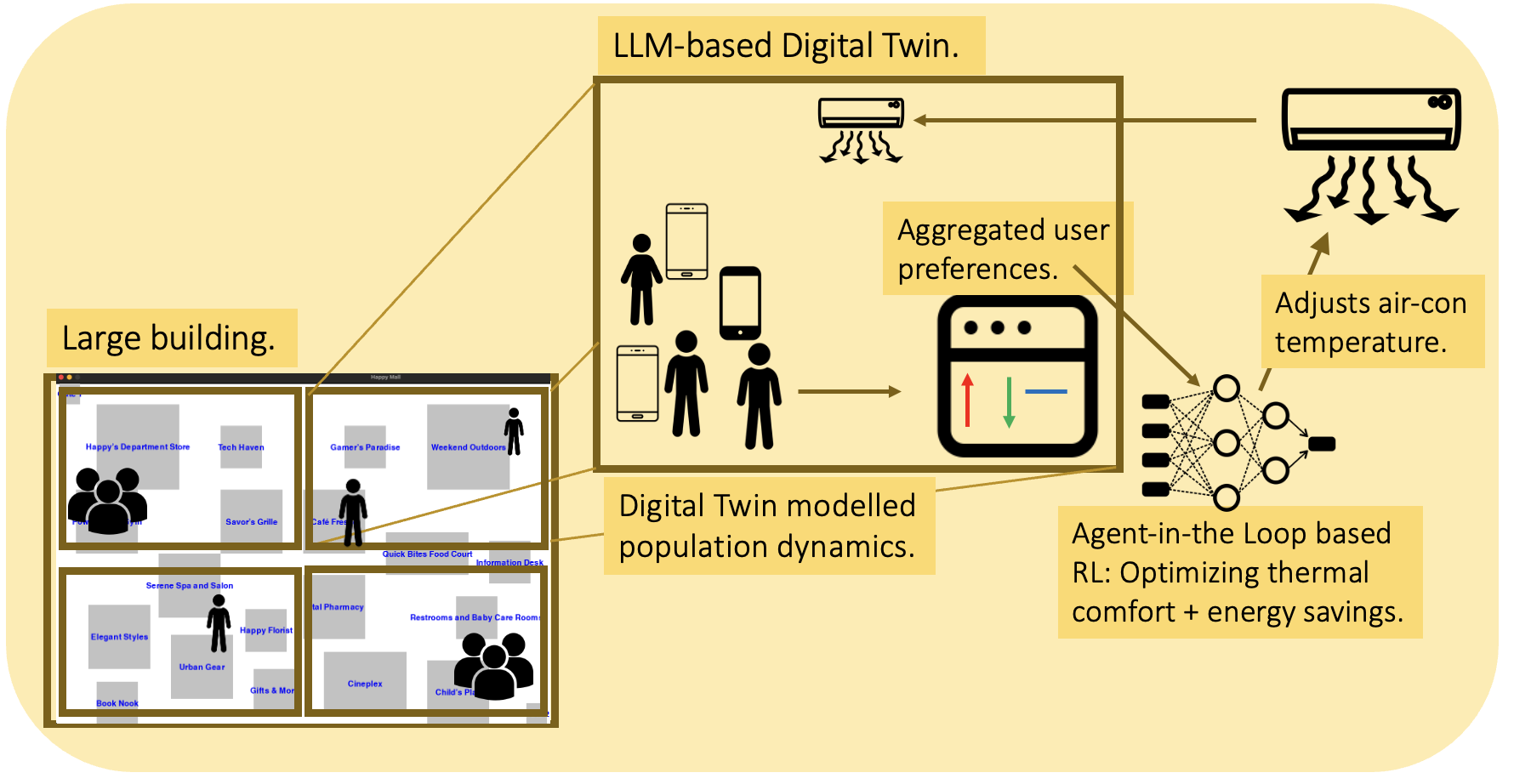
Uses an LLM-based digital twin to simulate heterogeneous human feedback for adaptive HVAC control. Aggregated occupant preferences enter the reward objective, making collective preference part of what the controller learns to optimize.
2023 and before
Machine Learning for Healthcare
Before focusing on multi-agent systems, I worked closely with clinicians on decision support and scarce-resource allocation across international, national, and local datasets. These projects moved from validating risk scores, to aligning predictions with clinical decision horizons, to estimating treatment effects when a potentially beneficial intervention cannot be given to every eligible patient.
Multi-Horizon Predictive Models for Guiding Extracorporeal Resource Allocation in Critically Ill COVID-19 Patients
B. Xue, N. Shah, H. Yang, T. Kannampallil, P. R. O. Payne, C. Lu, and A. S. Said
Developed calibrated predictions at multiple time horizons for critically ill COVID-19 patients, aligning risk estimates with when scarce ECMO allocation decisions must be made.
Assisting Clinical Decisions for Scarcely Available Treatment via Disentangled Latent Representation
B. Xue, A. S. Said, Z. Xu, H. Liu, N. Shah, H. Yang, P. R. O. Payne, and C. Lu
Used disentangled latent representations to separate prognostic factors from heterogeneous treatment effects, supporting decisions when treatment capacity is limited.
Validation of ECMO Mortality Prediction and Severity-of-Illness Scores in an International COVID-19 Cohort
N. Shah, B. Xue, Z. Xu, H. Yang, E. Marwali, H. Dalton, P. P. R. Payne, C. Lu, A. S. Said, and the ISARIC Clinical Characterisation Group
Evaluated mortality prediction and severity-of-illness scores in an international COVID-19 cohort, testing how established tools behave across a diverse clinical population.